Commercial Relaunch of a Prepared Meals Brand for 3x Growth
“We’ve seen steady growth since we started. The process is smooth, and the impact is noticeable across all platforms.”

How a Houston ready-to-eat meal company was renamed, rebranded, redesigned, and commercially relaunched, contributing to approximately 3x sales growth
Executive Summary
A Houston-based prepared meals company, formerly known as Healthy Gourmet Your Way, had a valuable product, a practical customer proposition, and an addressable market with strong demand for convenient, ready-to-eat meals. However, the business was constrained by its positioning, brand architecture, customer experience, and conversion system.
The company was at risk of shutting down.
The engagement focused on a full commercial reset. This was not a cosmetic redesign or a narrow marketing exercise. The business was renamed, repositioned, rebranded, redesigned, and rebuilt around a more ownable customer promise.
Healthy Gourmet Your Way became Flavorly.
The transformation included the new name, full brand identity, logo design, marketing direction, packaging design, digital experience redesign, conversion optimization, and customer behavior analysis through real-time analytics and FullStory. The goal was to move the business away from a generic health-focused meal-prep identity and toward a more premium, flavor-led, ecommerce-ready food brand.
During and following the engagement, the company avoided shutdown and sales grew by approximately 3x.
The strategic lesson is clear: in a crowded consumer category, the product is rarely the only business. The brand, packaging, digital journey, conversion architecture, and customer promise are also part of the operating model. When those systems are misaligned, demand leaks. When they are rebuilt around a sharper commercial thesis, the same company can behave like a new business.
Client Profile
Company: Formerly Healthy Gourmet Your Way, later repositioned as Flavorly
Market: Houston, Texas
Industry: Prepared meals, frozen ready-to-eat meals, food commerce
Business model: Direct-to-consumer meal ordering, prepared meals, heat-and-eat convenience
Engagement type: Brand transformation, commercial repositioning, digital strategy, packaging design, marketing, customer experience, and conversion optimization
Reported outcome: Approximately 3x sales growth and business stabilization
Situation
Healthy Gourmet Your Way operated in a category with real demand but increasing competitive pressure.
Consumers wanted convenient, high-quality meals that reduced the burden of cooking, planning, and grocery shopping. At the same time, the broader meal-delivery and prepared-food market was becoming more sophisticated. Customers were no longer only responding to diet-specific claims or generic “healthy meal” positioning. They were increasingly seeking convenience, taste, variety, trust, and a more elevated food experience.
The company had a product that could serve this demand, but the business identity did not fully reflect the opportunity.
The original name, Healthy Gourmet Your Way, communicated functionally. It suggested health, customization, and convenience. However, it did not create a distinctive emotional position in a crowded category. It also limited the company’s ability to move beyond the language of diet food into a broader culinary proposition.
The business needed to feel less like a local meal-prep service and more like a scalable food commerce brand.
Core Business Problem
The company was not only facing a marketing problem. It was facing a business viability problem.
The underlying issue was commercial misalignment across five areas.
1. The brand did not create enough differentiation
The original identity placed the company in a crowded field of health-oriented prepared meal providers. While the product had value, the brand did not create enough separation from competitors.
The name was descriptive but not ownable. It explained what the company did, but it did not create a memorable platform for future growth.
2. The customer promise was too narrow
The earlier positioning leaned heavily into health and convenience. Those attributes mattered, but they were not enough to build a distinctive premium brand.
The stronger commercial opportunity was to reposition the company around flavor, global inspiration, ease, and enjoyment. That shift allowed the business to compete on more than utility.
3. The visual identity and packaging were underleveraged
In food commerce, packaging is not just containment. It is trust, quality signaling, repeat-purchase reinforcement, and brand memory.
The company needed packaging and visual design that made the product feel more premium, more modern, and more desirable.
4. The digital experience was not converting at its potential
The online experience needed to do more than display meals. It needed to guide customers from interest to purchase, reduce friction, clarify the offer, and reinforce trust.
The website and on-page experience required stronger conversion architecture.
5. The business lacked behavioral visibility
The company needed a more precise understanding of how customers were behaving online.
Real-time user analytics and FullStory were used to observe where users hesitated, where friction appeared, and where the digital experience was failing to convert demand into sales.
Diagnostic Insight
The company did not need a better logo alone.
It needed to become a sharper business.
The strategic diagnosis was that Healthy Gourmet Your Way had an identity problem, a conversion problem, and a category-positioning problem happening at the same time.
The product lived in a category where customers make decisions emotionally and practically. They want the food to be healthy enough, convenient enough, and easy enough, but they also need it to feel desirable.
“Healthy prepared meals” is a functional proposition.
“Flavorly” is a brand platform.
That difference matters.
A functional proposition can explain a product. A brand platform can create memory, preference, repeat purchase, and expansion potential.
Strategic Approach
The engagement was structured around a full commercial relaunch.
1. Rename the company
The name Flavorly was created to give the company a more ownable and scalable identity.
The new name shifted the center of gravity from health compliance to food enjoyment. It created a brand that could stretch across cuisines, product lines, menus, packaging, campaigns, and future customer segments.
The name was shorter, more memorable, and more emotionally aligned with the experience the business needed to sell.
2. Reposition the business
The company was repositioned away from a narrow diet-specific meal-prep frame and toward a broader culinary experience.
The new strategic territory centered on flavor, convenience, discovery, and prepared meals that fit modern lifestyles.
This gave the company a more attractive commercial narrative. Instead of asking customers to buy meals because they were healthy, the brand could invite customers to buy meals because they were flavorful, convenient, high-quality, and easy to enjoy.
3. Build a new brand identity
The rebrand included a new visual system and logo design.
The goal was to make the company feel like a modern consumer food brand, not a generic local meal-prep provider. The identity needed to work across ecommerce, packaging, marketing, social content, product presentation, and customer communications.
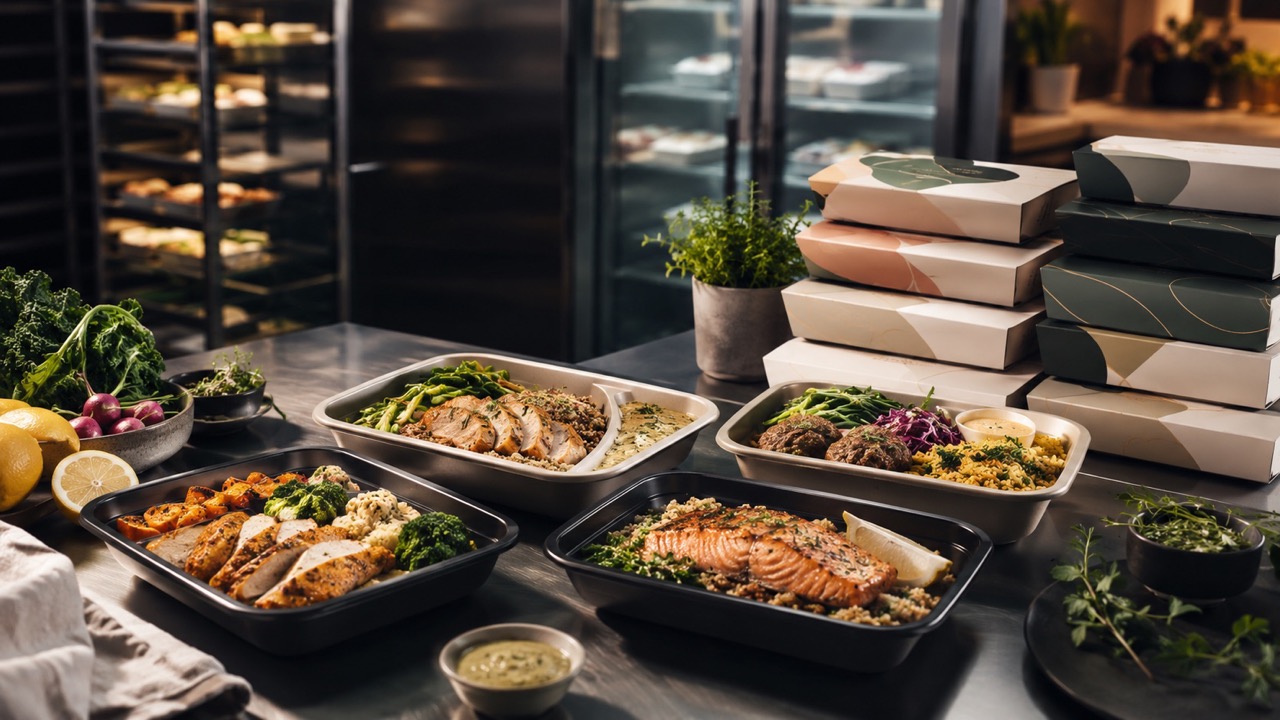
4. Redesign the packaging experience
Packaging was redesigned as part of the broader business transformation.
For a frozen ready-to-eat meal company, packaging carries a large portion of the customer’s trust burden. It needs to communicate quality before purchase and reinforce confidence after delivery.
The packaging work supported the broader shift from utility to premium experience.
5. Redesign the customer-facing experience
The business was effectively rebuilt as a new company from the customer’s perspective.
The redesign touched the way customers encountered the brand, understood the offer, evaluated the meals, and moved toward purchase.
This included marketing, digital presentation, product communication, and the broader experience around the new Flavorly identity.
6. Use behavioral analytics to improve conversion
The engagement went beyond brand strategy.
Real-time user analytics and FullStory were used to evaluate how customers interacted with the website and where the experience created friction.
This allowed the work to move from opinion-based design to evidence-informed optimization. Customer behavior was used to guide on-page improvements, reduce drop-off, and strengthen the path from interest to purchase.
What Changed
Before the transformation, the company was operating with a brand identity that felt more functional than distinctive.
After the transformation, the business had a sharper commercial platform.
Before
- Healthy Gourmet Your Way name
- Health-forward but less distinctive positioning
- Local prepared-meal perception
- Limited brand memorability
- Underdeveloped packaging system
- Digital experience not fully optimized for conversion
- Limited visibility into customer behavior
- Business at risk of shutting down
After
- Flavorly name
- Stronger flavor-led positioning
- More premium food commerce identity
- New logo and visual identity
- Redesigned packaging
- Redesigned marketing and customer-facing experience
- Improved conversion strategy
- Real-time user analytics and FullStory-informed optimization
- Approximately 3x sales growth
- Business stabilized and avoided shutdown
Business Impact
The transformation contributed to approximately 3x sales growth and helped the company avoid shutdown.
The growth was not the result of a single tactic. It came from aligning the business across brand, packaging, marketing, digital experience, and conversion intelligence.
The company emerged with a clearer identity, a stronger customer promise, and a more scalable commercial foundation.
This was effectively a new company from the customer’s perspective.
Why It Worked
The work succeeded because it addressed the business at the level where value was actually leaking.
The company did not only need more awareness. It needed a reason to be remembered.
It did not only need more website traffic. It needed to convert the traffic it already had more effectively.
It did not only need better visuals. It needed a brand system that supported trust, desirability, purchase, and repeat customer behavior.
It did not only need marketing. It needed a sharper commercial identity.
By renaming the company, rebuilding the brand, redesigning the packaging, improving the digital experience, and using behavioral analytics to optimize conversion, the engagement attacked the problem across the full customer decision journey.
Strategic Implication for Investors and Owners
This case is instructive for investors, operators, and business owners evaluating underperforming consumer companies.
Many struggling businesses are not broken because the product has no market. They are broken because the market cannot clearly understand, remember, trust, or act on the value proposition.
In those situations, capital alone is not the answer. More advertising is not the answer. A better website alone is not the answer.
The answer is commercial repositioning.
When the brand, product story, packaging, digital journey, and conversion system are rebuilt around a sharper thesis, a struggling business can begin to perform like a different asset.
That is what happened here.
Healthy Gourmet Your Way became Flavorly.
A business at risk of shutting down became a stronger, more coherent food commerce brand.
Sales grew by approximately 3x.
Engagement Areas
Brand strategy
Company naming
Commercial repositioning
Logo design
Visual identity
Packaging design
Marketing strategy
Digital experience redesign
Customer journey design
Conversion optimization
Real-time user analytics
FullStory behavior analysis
On-page optimization
Business stabilization
Growth execution
Result
Approximately 3x sales growth
Business avoided shutdown
Company renamed, rebranded, redesigned, and commercially relaunched as Flavorly
Explore more blogs


Let’s create something exceptional together

From content to execution, we help brands transform attention into real, scalable results.